
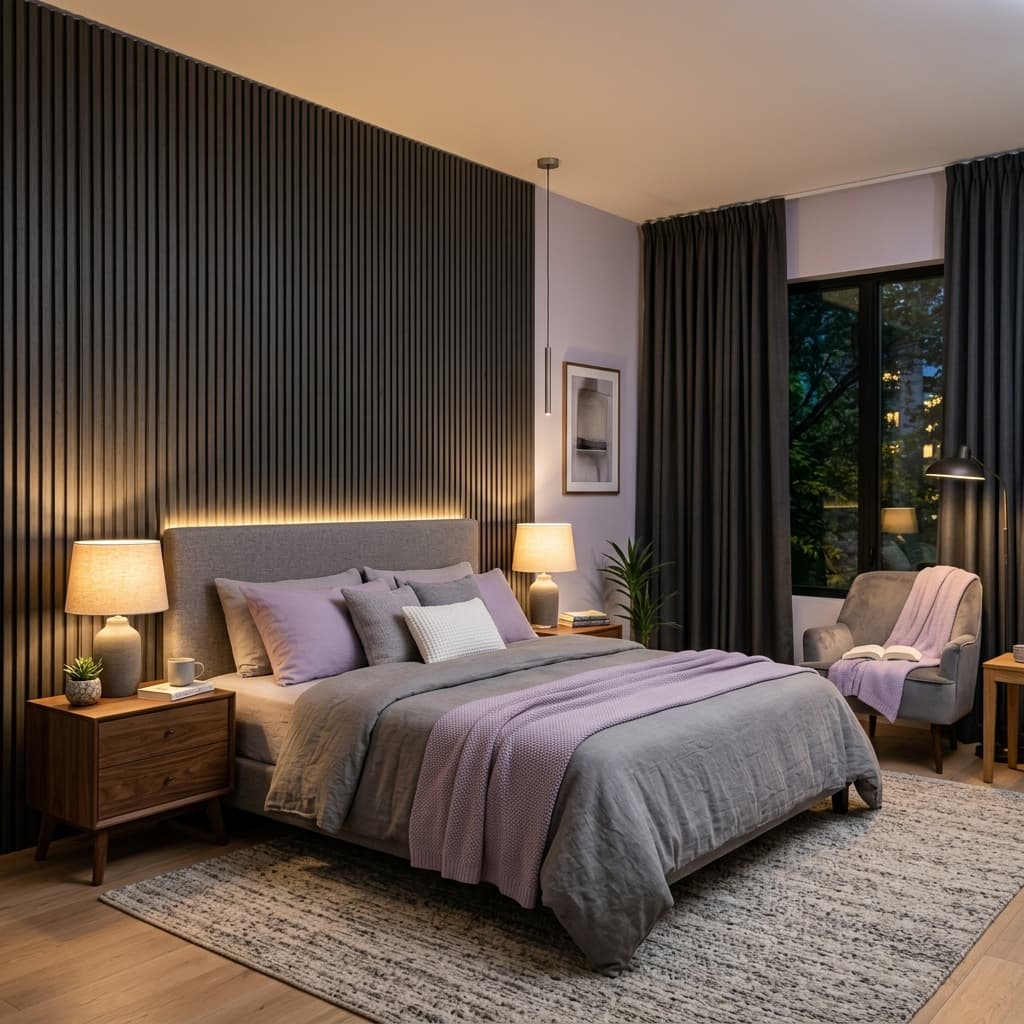
Designing Your Personal Retreat
Your bedroom is the one room in your home that's entirely yours — a personal sanctuary where you start and end each day. Unlike the living room (which needs to impress guests) or the kitchen (which needs to be functional), the bedroom is all about comfort, calm, and personal expression. Here's how to get it right.
1. The Color Palette Formula
Bedroom colors should promote relaxation and sleep. The proven formula: choose one base color from the cool spectrum (soft blue, sage green, lavender, warm grey, or blush pink), use white or off-white for the ceiling and trim, and add one accent color through textiles and art (mustard gold, dusty rose, or deep teal work beautifully).
For the accent wall behind the bed, consider textured wallpaper, wood panel cladding, or a painted geometric pattern — it creates a focal point without overwhelming the room. Keep the remaining three walls in the base color for balance.
2. Lighting Design
Bedroom lighting should be the softest in the house. Layers to include:
Ambient: A dimmable flush-mount ceiling light or a statement pendant over the center of the room (not over the bed — it creates visual heaviness).
Task: Bedside table lamps or wall-mounted reading lights with adjustable arms. These should be at the right height for reading in bed — shade bottom at approximately 20 inches above the mattress surface.
Accent: LED strips behind the headboard or under the bed frame create a floating effect. Recessed cove lighting in the false ceiling adds soft ambient warmth.
3. Furniture Layout Principles
The bed is always the hero. Place it centered on the longest wall, facing the door (so you can see who enters — a primal comfort instinct). Leave at least 24 inches of walkway on each side of the bed. Nightstands should be proportional — too small looks lost, too large overwhelms. A 20-24 inch wide nightstand is ideal for most beds.
For compact bedrooms (10x12 feet), skip the dresser and use a full-wall wardrobe instead. It's more storage-efficient and creates a cleaner look. If the room allows, add a small reading chair and floor lamp in a corner — it's a luxury that makes the bedroom feel like a suite.
4. Textile Layers
Bedding makes or breaks a bedroom. Layer from bottom to top: fitted sheet (crisp white or base color), flat sheet (matching or complementary), light blanket or quilt, decorative throw at the foot (accent color), and pillows — two sleeping pillows plus two decorative Euro shams against the headboard. Use natural fabrics (cotton, linen) for the Indian climate.
5. The Window Treatment
Use double-layered curtains: a sheer inner layer for daytime privacy with diffused light, and a heavy blackout outer layer for sleeping. Hang curtain rods 6-12 inches above the window frame and extend them 4-6 inches beyond each side — this makes windows appear larger and allows maximum light when curtains are open.
Conclusion
A well-designed bedroom doesn't need to be expensive — it needs to be intentional. Start with the right room proportions (Naksha AI optimizes bedroom dimensions for furniture compatibility), then layer in your personal style through colors, lighting, and textiles. The result is a space you'll look forward to every evening.